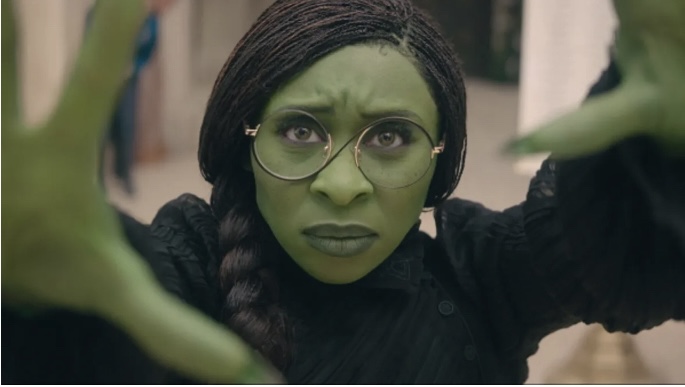
Elphaba in Wicked, both in the original novel by Gregory Maguire and the movie adaptation of the Broadway play, presents powerful commentary on race, identity, and societal marginalization through her green skin. Black women relate to Elphaba; we might as well be green. 😂 Elphaba, the “Wicked Witch of the West” becomes a metaphor for racial discrimination, alienation, and the complexities of prejudice.
Green Skin as a Physical Marker of Difference
Elphaba’s green skin immediately marks her as “other” in a world that values conformity and appearance. She has answers to commonly asked questions on deck; just to introduce herself. Sound familiar, sis?
While her skin is a literal marker of difference, it also symbolizes how physical traits often serve as indicators of racial or cultural identity in the real world. American Chattel slavery associated brown skin with bondage. Colorism plagues communities of color from the brown paper bag test in the U.S. to the Dalit in India. Around the world, people of different races or ethnicities are often judged based on their physical appearances. Elphaba’s green skin sets her apart from others and leads to her being labeled as “different,” “monstrous,” or “wicked,” despite her having a fundamentally good nature. Think about the negativity and wickedness society has attached to the word, “black.”
Elphaba’s green skin serves as a stand-in for racial or ethnic markers in our own world—features that are often used to judge, segregate, and marginalize people. Throughout the narrative, Elphaba’s skin color causes people to perceive her as “unnatural,” and they immediately assign her negative traits based on this external marker. Elphaba makes black women feel seen and understood.
Elphaba’s Alienation and Internal Struggle
From the outset, Elphaba’s alienation is deeply tied to her green skin. Growing up in the land of Oz, she faces prejudice from those around her, including her family, peers, and even authority figures. The cruelty she faces from others mirrors the way black women often experience discrimination and exclusion. In the film, Elphaba is constantly asked to “prove herself.” Despite her intelligence and abilities, Elphaba struggles to fit into a society that rejects her for something she cannot control—her appearance.
This internal struggle is also evident in Elphaba’s evolving sense of self. While she initially tries to “fit in” with the expectations placed on her, she soon realizes that trying to conform to societal norms is impossible. She grows into her identity as an outsider and ultimately rejects the labels that society imposes on her. This mirrors the experiences of black women who, upon realizing that they cannot change their inherent identity, may embrace their uniqueness and reject societal expectations. 🙏🏾💕
The Role of Prejudice in Defining “Wickedness”
Elphaba’s transformation into the “Wicked Witch” is driven by the constant judgment and mistreatment she faces because of her skin color. The term “wicked” is used to describe her not because of her actions—though she does have moments of moral ambiguity—but because she is different, and that difference is seen as threatening. In the world of Oz, as in our own, “wickedness” is often associated with those who deviate from social norms, especially when their difference challenges the dominant culture.
The use of the word “wicked” to describe Elphaba is a reflection of how society often labels black women as “other,” “evil,” or “dangerous” based on superficial traits. This is reinforced by the propaganda campaigns in the story, which manipulate public perception of Elphaba to portray her as a villain. The narrative critiques how society often demonizes people who don’t fit into its narrow standards of acceptability, using them as scapegoats for broader societal problems.
Contrast with Glinda’s Privilege
The contrast between Elphaba and Glinda (the Good Witch) further underscores the racial and social commentary. Glinda is blonde, beautiful, and conventionally “good” in the eyes of society. She embodies the ideals of beauty, whiteness, and privilege, whereas Elphaba, as a green-skinned woman, is socially ostracized. Glinda, while at first seemingly shallow and self-centered, is ultimately revealed to be complicit in the systems that marginalize Elphaba. When Glinda is offered “perceived” power, she falls in line to take it. This highlights the dynamics of privilege and complicity—those who benefit from the dominant social order (like Glinda) often remain blind to the struggles of those who are oppressed or excluded.
As Glinda becomes more aware of the injustices Elphaba faces, the narrative asks the audience to reflect on how those with privilege often fail to acknowledge or address the systemic inequalities that affect marginalized groups. Glinda’s eventual support for Elphaba serves as a challenge to the binary of “good” and “evil” and urges a more nuanced understanding of identity and justice.
The Legacy of “Wickedness”
In the broader context of the story, the idea of “wickedness” is critiqued as a social construct rather than an inherent moral quality. The movie encourage the audience to question how societal standards of “good” and “evil” are often influenced by power dynamics and cultural biases. Elphaba’s green skin becomes a symbol of how those who are “othered” are often made to bear the blame for societal ills or crises, even when they are not responsible for them.
This commentary is particularly timely, black women and LGBTQ+ 🏳️🌈 🏳️⚧️ folk are blamed for the challenges faced by American society. Elphaba’s ultimate fate is tragic, representative of marginalized communities. That said, Elphaba’s fate also serves as a form of resistance against the dehumanizing systems that seek to control and define her. Sound familiar, sis?
Conclusion
The use of Elphaba’s green skin in Wicked is a powerful metaphor for race, identity, and marginalization. Through Elphaba’s experience, the story critiques the ways in which society judges and ostracizes people based on their outward appearance, particularly physical characteristics that fall outside the norm. Her journey reflects the painful realities of living in a world that prizes conformity and punishes difference, and in doing so, it invites the audience to reflect on the systems of power, prejudice, and discrimination that continue to shape our world. Ultimately, Wicked challenges the notion that those who are deemed “other” are inherently wicked, instead urging us to reconsider how societal labels and assumptions are constructed and the harm they cause.
Author’s Bio
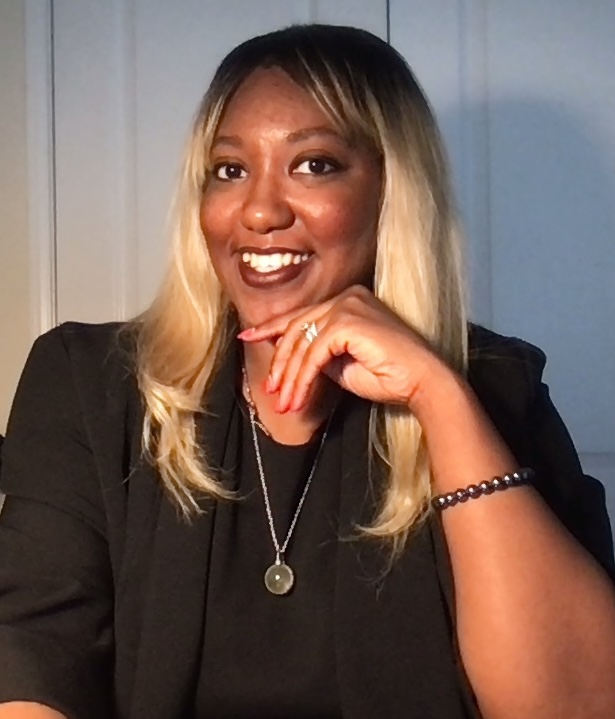
Latrice Burks-Palmerio, Esq. (AKA #blkgrlmgclwyr) is a Los Angeles based impact litigator, activist, and author. She offers legal consulting services to strong black women experiencing workplace discrimination. Latrice also offers Intellectual Property consultations to black entrepreneurs. For black women seeking #exodus, Latrice offers immigration law services, as well.
This role serves Latrice’s greater purpose because she is a champion for equality of all types. That said, she cares deeply for black women, as they are her community.
#blkgrlmgclwyr
IG: @tricie93
Youtube: https://www.youtube.com/@blkgrlmgclwyr
Click HERE to book a consultation with #blkgrlmgclwyr:
Please like, share, and subscribe!

 #blkgrlmgclwyr - blog
Leave a comment