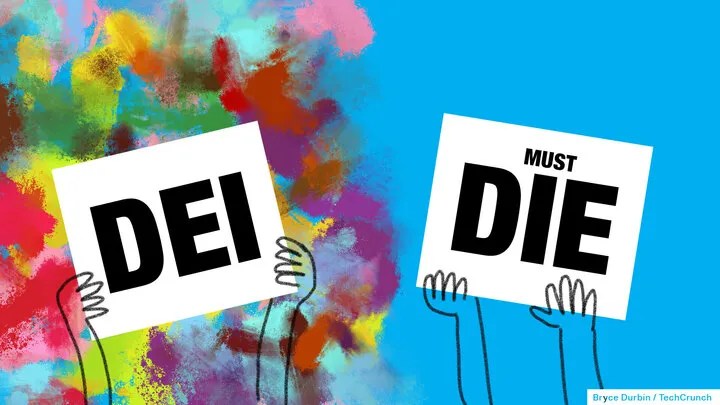
In recent years, the push against Diversity, Equity, and Inclusion (DEI) policies has reached a new high, with figures like Donald Trump and many of his political allies framing DEI as an existential threat to American values. These attacks paint DEI initiatives as divisive, portraying them as mechanisms that favor certain groups over others—particularly when it comes to race, gender, and sexual identity. As a civil rights lawyer who represents Black women and their allies in employment-related disputes, I have seen firsthand how this rhetoric can undermine critical efforts to achieve fairness in the workplace and beyond.
Trump’s anti-DEI stance is not just a policy shift; it is a dangerous ideological assault on the very foundations of inclusivity that have been integral to the progress we’ve made as a country. The result of demonizing DEI will inevitably be a reduction in diverse spaces, which has profound consequences for our workplaces, educational institutions, and the future of our economy.
The Erosion of Diverse Spaces
The primary goal of DEI policies is simple: to ensure that people from historically marginalized groups have a seat at the table, whether in the workplace, educational institutions, or public forums. When organizations prioritize DEI, they create environments that are more open to different perspectives, cultures, and lived experiences. These diverse environments not only enrich our social fabric but also drive innovation and creativity, which are vital to economic and social progress.
By attacking DEI, the right has effectively created an environment where homogeneous spaces are seen as “safe” or more “efficient.” However, the consequences of pushing for homogeneity are dire. Homogeneous environments—whether in workplaces, schools, or government—inevitably lead to echo-chamber thinking, where ideas and experiences are confined to a narrow range. Without diverse perspectives, we become less capable of solving complex problems, less open to new ideas, and less likely to understand the needs of a rapidly changing world.
The Financial and Social Costs
Anti-DEI rhetoric is not only socially harmful, but it also poses significant risks to the financial stability of the nation. Businesses and organizations that dismiss DEI policies miss out on the considerable economic benefits that diversity brings. Numerous studies have shown that companies with more diverse workforces are more innovative and financially successful. According to McKinsey’s research, companies in the top quartile for racial and ethnic diversity are 35% more likely to have financial returns above their industry’s median. When businesses fail to invest in diversity, they lose out on the intellectual capital and innovative potential that marginalized groups bring to the table.
This growing backlash against DEI policies will also have long-term economic consequences as diverse and marginalized groups begin to redirect their financial power towards themselves. Communities that have been excluded from full economic participation will turn inward and focus on building more inclusive, self-sustaining economies. This shift will be led by those who have been marginalized—not just in terms of race, but also in gender, sexual identity, and disability. When traditional avenues of wealth creation are shut down by anti-DEI policies, these groups will find new ways to leverage their collective economic power. The country will suffer financially as this critical segment of the population reclaims its purchasing power and invests in alternatives that serve their own needs.
The Impact on Higher Education
Trump’s anti-DEI stance has also had a chilling effect on higher education, a sector that plays a critical role in shaping the future of the nation. The attacks on DEI programs in universities have made it more difficult for schools to create diverse, inclusive student bodies that reflect the realities of American society. As universities adopt policies that limit the consideration of race, gender, and other factors in admissions, we are likely to see a sharp decline in the diversity of student populations. This will have far-reaching implications for the quality of education and the long-term success of our future leaders.
When I was in college, the term “WOKE” was not a punchline or a political weapon—it was an ideal. It represented a commitment to understanding the lived experiences of people who had been historically excluded or marginalized. “WOKE” meant confronting uncomfortable truths and striving for a more just world. I learned from scholars like Norton et al. (2012) who argued that white Americans often view efforts to level the playing field as a zero-sum game—where one group’s gain is perceived as another group’s loss. This attitude is evident today, as we witness the right’s weaponization of DEI policies. The more we strive for inclusivity, the louder the backlash grows, as those who feel threatened by diversity react by labeling DEI initiatives as divisive, harmful, and unnecessary.
This zero-sum mentality is even more dangerous now than it was when I was in school. It feeds into the idea that achieving equity for one group necessarily means disadvantaging another. The truth is, equity is not a zero-sum game. In a just society, when one group rises, we all rise. But under the current political climate, where DEI is demonized, progress for marginalized groups is framed as a threat to the established order.
The Political Weaponization of DEI
The political right has successfully made DEI the boogeyman of contemporary American politics, framing it as a tool for political correctness gone awry. This narrative is dangerous, as it frames inclusivity as something that is inherently “wrong” or “un-American.” The truth, however, because America is a multi-racial nation, DEI is critical to our success. When diverse voices are heard and included, we are better able to tackle the complex challenges of the 21st century. A more inclusive society is a stronger society, and a more inclusive economy is a more resilient economy.
The war against DEI, however, is not just a battle for the culture—it is a battle for the future of the nation. By fostering division and resistance to inclusion, we are setting up a future in which America is less competitive, less innovative, and less fair.
A Call to Action
As a civil rights lawyer who advocates for Black women in the workplace and represents victims of discrimination, I have seen the firsthand impacts of anti-DEI policies. The consequences of these policies will be felt not only by marginalized communities but by all Americans. We must resist the demonization of DEI and fight for a society that recognizes the importance of diversity, equity, and inclusion—not just in rhetoric, but in practice.
To those in the business, legal, and educational sectors: It’s time to stand up and defend DEI as a core value. Lawyers, activists, and educators must push back against this dangerous trend, not just in courtrooms and boardrooms, but in our communities and schools. The future of this country depends on our ability to uphold the principles of inclusivity and equity. Let’s come together to ensure that America remains a place where diversity is not feared, but embraced.
History is watching. It’s time to act.
Author’s Bio

Latrice Burks-Palmerio, also known by her powerful online presence as #blkgrlmgclwyr, is an expert in American politics with a deep focus on the intersection of American fascism and the decline of empire. Latrice’s academic journey began with an International Baccalaureate class on totalitarian regimes, which laid the foundation for her nuanced understanding of authoritarianism. She graduated with honors in Political Science from the College of Wooster, where her thesis examined the dynamics of Black social movements in the U.S. Further refining her expertise, Latrice earned her law degree from USC Gould School of Law, gaining invaluable insights into U.S. Constitutional law.
As an impact litigator specializing in employment law for marginalized communities and representing survivors of sex crimes, Latrice combines her legal acumen with a deep commitment to justice. She has also contributed to the public discourse through self-published articles that analyze and critique the evolving political landscape of America. Latrice’s work examines how the structures of American fascism and empire-building manifest in law, policy, and social movements, making her a critical voice in understanding the political currents shaping the nation today.


 #blkgrlmgclwyr - blog
Leave a comment