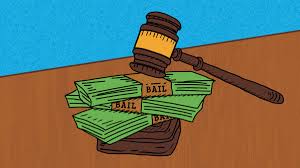
The United States, for all its rhetoric about fairness and justice, remains entrenched in double standards—especially when it comes to race, accountability, and political power. These inequities were glaringly evident in the 2024 election, where racial, gender, and class divides shape the political landscape, and in the criminal justice system, where people of color are disproportionately targeted and punished. It’s exhausting to watch as the marginalized continue to pay the price for an unequal system, while the powerful and privileged skate by with impunity.
The 2024 Election: A Case Study in Political Double Standards
As the 2024 election looms, it’s impossible to ignore the double standards at play. On one hand, you have Vice President Kamala Harris, a woman of color who has faced a litany of attacks throughout her political career—whether from the right-wing media or the progressive left. Despite her qualifications and ability to rise to the highest political office in the land, Harris has been subjected to a level of scrutiny and criticism that far surpasses that faced by her male counterparts. Yet, she continues to maintain grace and poise, earning respect as one of the most capable political figures of her generation.
On the other hand, you have Telfon Don, who, despite facing a mountain of criminal charges, continues to be treated like an untouchable figure within the Republican Party. The double standards couldn’t be more pronounced: a Black woman politician faces relentless criticism and an ongoing struggle to be seen as legitimate, while a wealthy, white male politician like Trump, who has been embroiled in scandal after scandal, is not only protected but celebrated by his supporters.
Harris remains a beacon of a better America. After enduring the chaos of the Trump administration, many Americans may be ready for a shift, a nurturing, stabilizing presence in the White House. If anything, the four years under Trump’s fascist tendencies may have prepared the country for a different kind of leadership—one that heals, listens, and leads with empathy.
The Criminal Justice System: Unequal Accountability
If the political realm demonstrates double standards, the criminal justice system amplifies them. Time and time again, we see that the law is applied differently based on race and status. The case of Daniel Penny, the former Marine who fatally choked Jordan Neely on a New York City subway, is a perfect example. While this incident sparked protests and debates about racial violence and police overreach, Penny—who is white—was not held accountable to the same degree as Black individuals in similar circumstances would have been.
Contrast this with the treatment of people of color who face harsh, often life-altering sentences for crimes that are treated more leniently when committed by white individuals. Look at Hunter Biden’s legal troubles. While his case is certainly complicated and involves substance abuse, his public image has often been used to attack Joe Biden’s administration. Meanwhile, individuals from marginalized communities are criminalized for similar, or even less severe, offenses and receive far harsher penalties.
Then there’s the overarching issue of police violence. The history of police brutality against Black and Brown communities—whether it’s the murders of George Floyd or Breonna Taylor—shines a light on the structural racism within law enforcement. But for white individuals, especially men in positions of power, criminal actions are often overlooked or downplayed, especially when those individuals are aligned with powerful institutions.
White men, particularly those who benefit from the oligarchy, can often act with impunity. Take Luigi Mangione, for example—a figure whose actions, though questionable, are being framed in the media as part of a larger “disruption” to the status quo. Mangione’s growing popularity and critique of the healthcare system threaten the oligarchic structures in place, and the media response has been telling. When wealthy white men challenge the system, it’s often seen as a “radical” act, a statement of defiance rather than one of criminality. Luigi fits the bill.
On the flip side, when people of color challenge systems of inequality—whether through protests, civil disobedience, or even simple assertions of their rights—they are labeled as dangerous or criminal. This unequal treatment underscores the double standards inherent in the justice system.
Exhaustion and Resilience: The Struggle for Fairness
Double standards are exhausting! For the marginalized, it’s not just a matter of political theater or criminal justice; it’s about survival. It’s about constantly playing by rules that were never meant for you to win. People of color in America are tired of fighting for fairness in a system that has never been designed with their best interests in mind.
Vice President Kamala Harris has become a symbol of perseverance against these double standards. Her grace under pressure is a testament to the strength of those who have been historically underestimated and mistreated. She’s shown that despite the obstacles, a woman of color can reach the highest echelons of power. And in 2028, after the chaos of a Trump presidency, America may be ready to embrace a leader who embodies healing, compassion, and resilience.
A Call for Change: Navigating the Chaos
The 2024 election is a litmus test for the future of America. It will determine if the country will continue to perpetuate the same systems of inequality or if it will choose a path toward greater accountability and justice. If you voted for Trump, perhaps you’ll get the chaos you sought—because the reality is, this chaos is not just a political game. It has real consequences for the most vulnerable populations in America. If you didn’t vote for him, may you find the protection and strength needed to navigate the uncertainty ahead.
One thing is clear: the time for reckoning is now. The rules must be changed so that they apply fairly to everyone, regardless of race, gender, or political affiliation. Until then, those who have been marginalized will continue to fight for a future where double standards are no longer the norm.
Take care out there.
#blkgrlmgclwyr out.
Author’s Bio
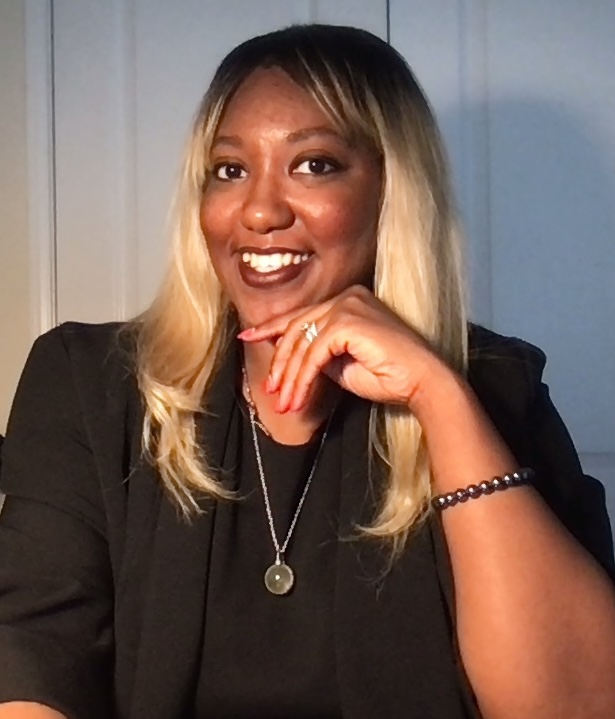
Latrice Burks-Palmerio, also known by her powerful online presence as #blkgrlmgclwyr, is an expert in American politics with a deep focus on the intersection of American fascism and the decline of empire. Latrice’s academic journey began with an International Baccalaureate class on totalitarian regimes, which laid the foundation for her nuanced understanding of authoritarianism. She graduated with honors in Political Science from the College of Wooster, where her thesis examined the dynamics of Black social movements in the U.S. Further refining her expertise, Latrice earned her law degree from USC Gould School of Law, gaining invaluable insights into U.S. Constitutional law.
As an impact litigator specializing in employment law for marginalized communities and representing survivors of sex crimes, Latrice combines her legal acumen with a deep commitment to justice. She has also contributed to the public discourse through self-published articles that analyze and critique the evolving political landscape of America. Latrice’s work examines how the structures of American fascism and empire-building manifest in law, policy, and social movements, making her a critical voice in understanding the political currents shaping the nation today.

 #blkgrlmgclwyr - blog
Leave a comment