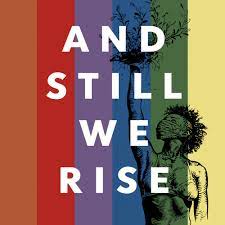
We don’t need a White House proclamation to validate our liberation. We never did. And under a second Trump administration—one hostile to our very being—we know better than to wait on a “Happy Juneteenth” message from a government that sees our freedom as optional, our culture as a threat, and our existence as conditional.
I say this with my whole chest: Juneteenth matters now more than ever.
We celebrate not because they gave us permission, but because our ancestors demanded it. Because even in the face of this white supremacist state machinery revving back into high gear—banning our books, deporting our kin, banning our countries, all while rolling out the red carpet for white South Africans—we hold the line of our dignity. We gather, we dance, we remember.
They can come for our stories, but they will never own our spirits.
The Zero-Sum Lie of White Supremacy
It’s no coincidence that as soon as Juneteenth was given federal recognition, the backlash machine kicked into high gear. Charlie Kirk called it a “CRT-inspired” holiday designed to compete with the Fourth of July. A competition, they say—as if celebrating Black freedom somehow cancels out American freedom.
But see, that’s how white supremacy always works: zero-sum thinking. If we get more, they think they lose something. They see acknowledgment of Black pain and Black resilience as an attack on white comfort. They see equity as erasure. It’s why even the simple act of recognizing that enslaved people didn’t get freedom on July 4, 1776, sends them into a tailspin.
But in my nuanced, revolutionary Black mind? There is room. There is always room for both truth and myth. Room to hold the complicated duality of a nation born on stolen land and built by stolen people. Room to celebrate July 4th for what it says it is, and Juneteenth for what it finally began to mean.
Juneteenth in the Belly of the Beast
Make no mistake: celebrating Juneteenth under a hostile, white nationalist government is resistance. It is not performative. It is not optional. It is the spiritual armor we wear as we face down policy violence, judicial rollback, and white grievance masquerading as patriotism.
And so we must amplify. Get loud. If the Trump regime wants to erase us, let them choke on the sound of our joy.
- Blast Black music in the streets.
- Throw block parties.
- Drop knowledge on the youngins.
- Hold teach-ins at your local community centers.
How Our White Allies Can Show Up
Let me be clear: supporting Juneteenth is not an Instagram post with a Malcolm X quote. If you are white and believe yourself to be an ally, your job is to materially support Black life—not co-opt it for clout. Here are some ways you can show up:
- Spend that money: Support Black-owned restaurants, caterers, bookstores, and vendors—not just on Juneteenth, but all year.
- Elevate, don’t center: Share the work of Black historians, writers, and organizers. Don’t rewrite the story—amplify the truth.
- Push back on the lies: When your uncle at the BBQ says Juneteenth is “divisive,” educate him. Loudly.
- Hold your institutions accountable: Ask your workplaces and schools not just to “acknowledge” Juneteenth, but to invest in Black communities year-round.
- Decolonize your calendar: If you celebrate July 4th, make room for June 19th with the same energy—because freedom ain’t free, and it sure as hell wasn’t universal in 1776.
We were never meant to survive—but still, we rise. And we will keep rising, every Juneteenth, every day, in defiance of this nation’s amnesia and in celebration of our people’s brilliance.
Because Black freedom is not just a day. It’s a declaration.
Happy Juneteenth. Now go make some noise.
✊🏾
Author’s Bio

Latrice Burks-Palmerio, also known by her powerful online presence as #blkgrlmgclwyr, is an expert in American politics with a deep focus on the intersection of American fascism and the decline of empire. Latrice’s academic journey began with an International Baccalaureate class on totalitarian regimes, which laid the foundation for her nuanced understanding of authoritarianism. She graduated with honors in Political Science from the College of Wooster, where her thesis examined the dynamics of Black social movements in the U.S. Further refining her expertise, Latrice earned her law degree from USC Gould School of Law, gaining invaluable insights into U.S. Constitutional law.
As an impact litigator specializing in employment law for marginalized communities and representing survivors of sex crimes, Latrice combines her legal acumen with a deep commitment to justice. She has also contributed to the public discourse through self-published articles that analyze and critique the evolving political landscape of America. Latrice’s work examines how the structures of American fascism and empire-building manifest in law, policy, and social movements, making her a critical voice in understanding the political currents shaping the nation today.

 #blkgrlmgclwyr - blog
Leave a reply to Natasha JL Riley EA Cancel reply